


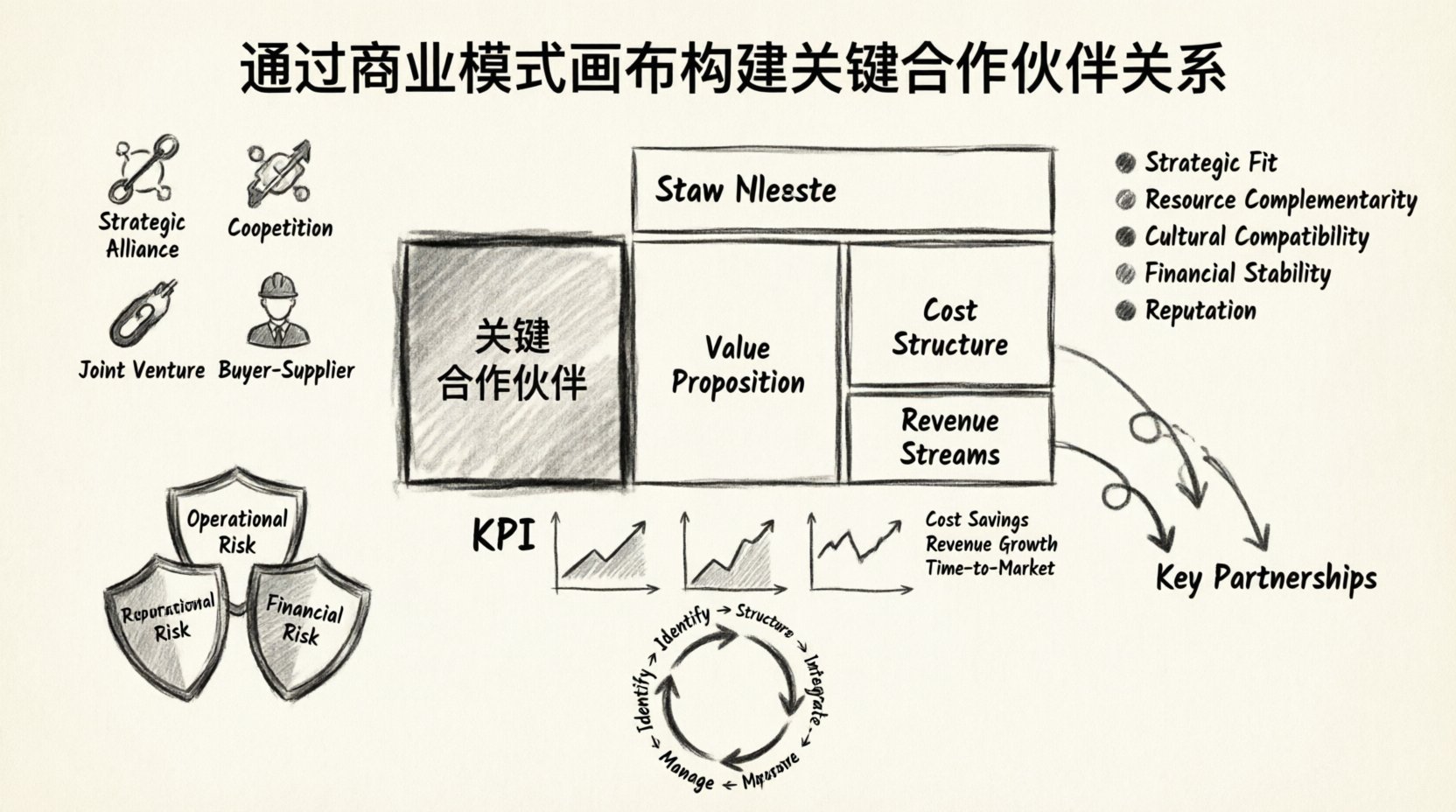
The Business Model Canvas (BMC) is a strategic management tool that provides a holistic view of an organization’s operations. While many focus on the value proposition or customer segments, the Key Partnerships block is often the backbone of scalability and risk mitigation. Building robust alliances allows businesses to optimize operations, reduce risk, and acquire specific resources without bearing the full cost internally.
This guide explores how to effectively identify, structure, and maintain key partnerships within the framework of the Business Model Canvas. We will move beyond surface-level definitions to examine the strategic mechanics that turn a simple connection into a competitive advantage.
🔍 Why Partnerships Matter in the Business Model Canvas
Partnerships are not merely about networking; they are structural components of the business model. When placed correctly within the Canvas, they influence cost structures, revenue streams, and resource acquisition. Understanding their function is the first step toward securing them.
Most organizations utilize partnerships for one of three primary reasons:
- Optimization and Efficiency: Outsourcing non-core activities allows a company to focus on its primary value proposition. This reduces overhead and increases agility.
- Reduction of Risk and Uncertainty: Joint ventures can share the financial burden of new market entry or product development, protecting the core entity from potential failure.
- Acquisition of Resources: Sometimes, a business simply does not own the necessary assets to deliver value. Partnerships provide access to these assets without requiring capital expenditure.
By integrating these partnerships into the Canvas, you create a visual representation of dependencies. This clarity is essential for negotiation and long-term planning.
🏗️ Understanding the Key Partnerships Block
In the Business Model Canvas, the Key Partnerships block sits on the left side, influencing the infrastructure. It answers the question: Who are our key suppliers and partners? What key activities do they perform?
This section requires careful definition. Vague partnerships lead to misaligned incentives and operational friction. Clear definitions ensure that the partner understands their role in delivering the final value to the customer.
Types of Partnerships
Not all partnerships are created equal. Depending on the strategic goal, different structures apply. The table below outlines the common types found within the BMC framework.
| Partnership Type | Description | Common Use Case |
|---|---|---|
| Strategic Alliances between Non-Competitors | Cooperation between companies that do not compete directly. | Marketing agreements, distribution channels. |
| Coopetition | Strategic partnerships between competitors. | Setting industry standards, shared R&D. |
| Joint Ventures | Creation of a separate legal entity by two or more parties. | Entering new geographic markets, heavy capital projects. |
| Buyer-Supplier Relationships | Standard procurement relationships. | Raw materials, essential services. |
🧩 Identifying Potential Partners
Securing the right partners begins with internal clarity. Before reaching out to external entities, you must understand what the partnership needs to achieve within the business model.
Alignment Criteria
To ensure a successful integration, potential partners must align with your organizational goals. Use the following checklist to evaluate prospects:
- Strategic Fit: Does their mission support your long-term vision?
- Resource Complementarity: Do they offer assets or skills you lack?
- Cultural Compatibility: Will their working style mesh with yours to prevent friction?
- Financial Stability: Can they sustain the relationship through market fluctuations?
- Reputation: How does their brand image affect yours?
When analyzing the Business Model Canvas, look for gaps in your Value Proposition or Key Resources. These gaps indicate where a partnership is necessary. For example, if you sell software but lack local support infrastructure, a partnership with a local service provider fills that gap in the Customer Service block.
🤝 Structuring the Partnership Agreement
Once a partner is identified, the structure of the relationship must be defined. This is often where many organizations fail, relying on handshake deals rather than formalized agreements.
Defining Roles and Responsibilities
Clarity prevents scope creep and conflict. Clearly delineate who handles what within the partnership. A common mistake is overlapping responsibilities, which leads to confusion and inefficiency.
- Input Responsibilities: What does the partner provide? (e.g., raw materials, logistics, technology).
- Output Expectations: What does the partner deliver to you or the end customer? (e.g., finished goods, service tickets).
- Decision Rights: Who makes the final call on pricing, product changes, or strategic pivots?
Risk Allocation
Partnerships inherently introduce risk. Who absorbs the cost if a project fails? Who is liable for regulatory compliance? The Business Model Canvas helps visualize this by showing how the partnership impacts the Cost Structure and Risk Profile.
Consider the following risk scenarios:
- Operational Risk: Disruption in supply chain.
- Reputational Risk: Partner misconduct affecting your brand.
- Financial Risk: Payment defaults or cost overruns.
A well-structured contract assigns these risks to the party best able to manage them. This balance ensures that both sides are motivated to maintain performance.
📊 Integrating Partnerships into the Canvas
The Business Model Canvas is dynamic. As partnerships evolve, the canvas must be updated. This ensures the visual model remains accurate to the current business reality.
Impact on Value Proposition
Partnerships often enhance the value delivered to customers. For instance, a streaming service partnering with a game console manufacturer improves accessibility. This changes the Customer Relationships block by adding convenience.
Impact on Cost Structure
Outsourcing manufacturing to a partner converts fixed costs (factory maintenance, labor) into variable costs (per-unit payment). This shifts the financial model and can improve cash flow flexibility.
Impact on Revenue Streams
Some partnerships create entirely new revenue sources. A technology firm licensing its IP to a hardware manufacturer creates a royalty stream. This should be explicitly noted in the Revenue Streams block.
🛡️ Managing Relationship Health
Securing a partnership is only the beginning. Maintenance is required to ensure the alliance remains valuable over time. Regular reviews prevent stagnation and misalignment.
Communication Protocols
Establish clear channels for communication. Ambiguity in reporting lines leads to bottlenecks. Determine:
- Frequency of status meetings.
- Escalation paths for critical issues.
- Shared tools for tracking progress.
Performance Metrics
Without metrics, you cannot measure success. Define Key Performance Indicators (KPIs) specific to the partnership. These might include delivery times, quality rates, or joint sales targets.
Track these metrics against the original business model assumptions. If the partnership is driving costs higher than anticipated, the Cost Structure block needs adjustment.
🚦 When to Adjust or Terminate
Not all partnerships succeed. It is vital to have a strategy for disengagement. Continuing a failing partnership drains resources that could be better deployed elsewhere.
Signs of Distress
- Consistent failure to meet agreed-upon KPIs.
- Significant cultural clashes affecting productivity.
- Changes in the partner’s strategic direction that conflict with your own.
- Emergence of better alternatives in the market.
Exit Strategies
When ending a partnership, handle the transition professionally to protect both brands. This includes:
- Reviewing contract termination clauses.
- Informing stakeholders and customers clearly.
- Transitioning responsibilities to other partners or internal teams.
- Settling financial obligations promptly.
Documenting the lessons learned from a terminated partnership helps refine future selection criteria in the Key Partnerships block.
📈 Measuring the Success of Partnerships
How do you know if the Key Partnerships block is working? You must look at the aggregate impact on the overall business model performance.
Quantitative Metrics
Use data to validate the partnership’s contribution. Relevant data points include:
- Cost Savings: Reduction in operational expenses due to outsourcing.
- Revenue Growth: Increase in sales attributed to the partner’s channel.
- Time to Market: Speed of product launches facilitated by the partnership.
Qualitative Metrics
Numbers do not tell the whole story. Qualitative assessment is equally important.
- Partner Satisfaction: Do they view the relationship as mutually beneficial?
- Strategic Agility: Can the business pivot quickly when the partner supports change?
- Innovation: Is the partnership driving new ideas or product features?
🔄 Continuous Improvement of the Partnership Model
The Business Model Canvas is a living document. As the market changes, so do the partnership requirements. Continuous improvement involves regular auditing of the partnership portfolio.
Consider conducting an annual review of the Key Partnerships block. Ask the following questions:
- Are these partners still critical to our current strategy?
- Have new competitors emerged that could offer better collaboration terms?
- Has our value proposition shifted, requiring different support?
- Are the terms of engagement still competitive?
This iterative process ensures that the partnerships remain a strength rather than becoming a liability. It keeps the business model aligned with external realities.
🌐 Global Considerations in Partnerships
For businesses operating across borders, partnerships often involve navigating complex regulatory environments. The BMC helps visualize these constraints.
Regulatory Compliance
Different regions have different laws regarding data, labor, and trade. A partner in one country may not be compliant with regulations in another. Ensure that the partnership structure accounts for these legal requirements.
Cultural Nuances
Business etiquette varies globally. Understanding local customs can prevent misunderstandings that stall progress. This is particularly important for long-term alliances where trust is built over time.
📝 Practical Steps for Implementation
To move from theory to practice, follow this structured approach to integrating partnerships into your Business Model Canvas.
- Map Current State: Sketch your current BMC and highlight existing partnerships.
- Identify Gaps: Look for Value Proposition or Resource areas that are weak.
- Brainstorm Candidates: List potential partners that fill these gaps.
- Evaluate Fit: Use the alignment criteria checklist to narrow the list.
- Negotiate Terms: Draft agreements that define roles, risks, and rewards.
- Update the Canvas: Reflect the new partnerships in the visual model.
- Monitor Performance: Set up the KPIs defined earlier.
This process transforms partnerships from ad-hoc connections into strategic assets. It ensures that every alliance serves a specific purpose within the broader business architecture.
🎯 Final Thoughts on Strategic Alliances
The Key Partnerships block is not a static element; it is a dynamic lever for growth. By treating partnerships with the same rigor as product development or customer acquisition, organizations can secure a sustainable competitive edge.
Focus on mutual value. A partnership where one side benefits significantly more than the other is prone to failure. Aim for a balance where both entities grow stronger through the collaboration.
Remember that the Business Model Canvas is a tool for visualization and strategy. Use it to keep the partnership ecosystem visible and manageable. Regular updates ensure that the model remains a true reflection of the business reality, allowing for informed decision-making.