

Enterprise Architecture acts as the strategic blueprint for complex organizations. It aligns business strategy with IT execution to ensure efficiency and agility. TOGAF, or The Open Group Architecture Framework, is the industry standard for this discipline. This guide walks you through the essential concepts, moving from foundational knowledge to practical application. You will understand the structure, the methodology, and how to apply it in real-world scenarios without relying on specific tools.
📚 Understanding the TOGAF Framework
TOGAF is not a software product. It is a flexible framework. It offers a structured approach for designing, planning, implementing, and governing an enterprise information architecture. The core value lies in its repeatability and adaptability. It allows organizations to standardize their approach to change.
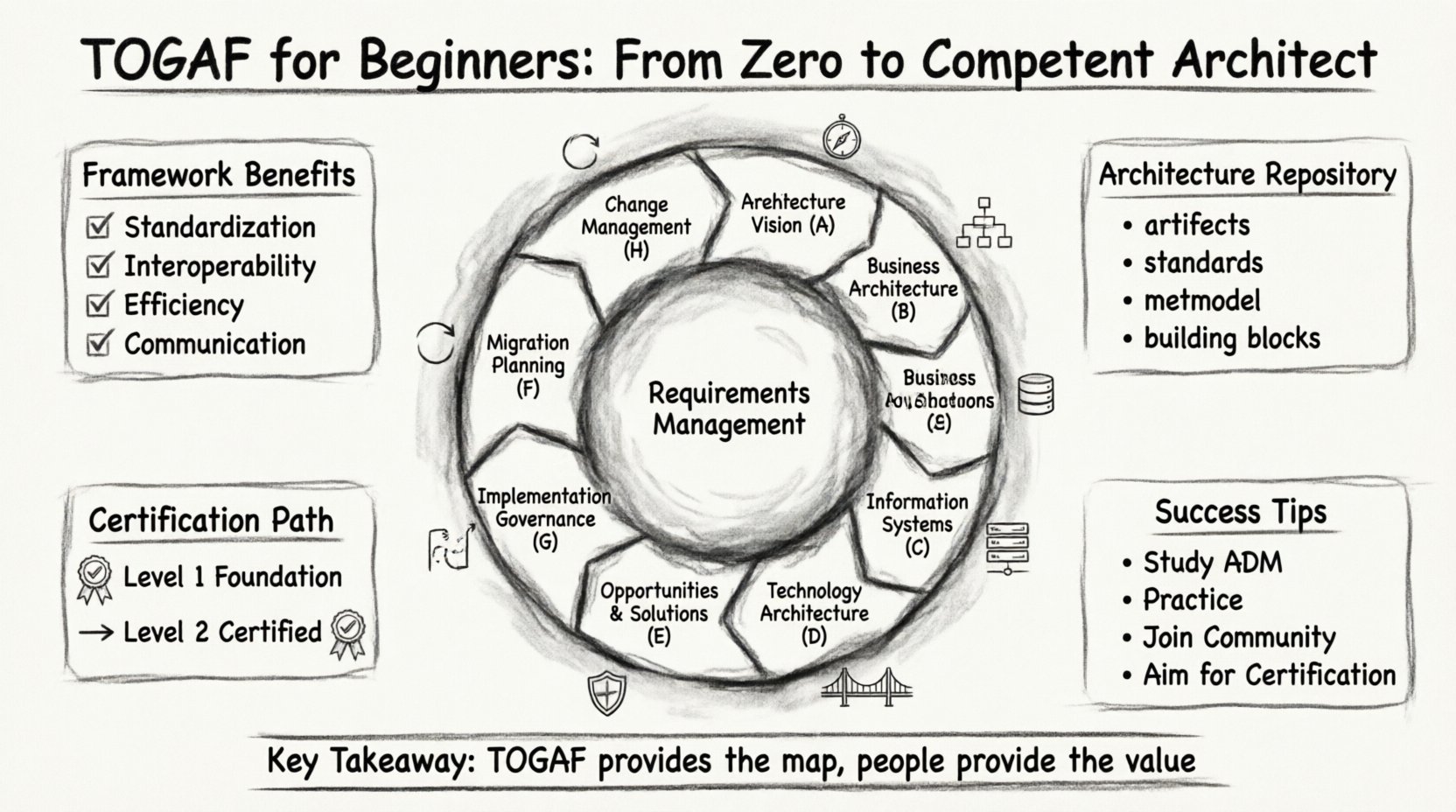
- Standardization: Ensures consistent practices across the organization, reducing confusion.
- Interoperability: Promotes systems that work together seamlessly across different departments.
- Efficiency: Reduces redundancy in architecture projects by reusing existing assets.
- Communication: Provides a common language for stakeholders and architects.
🔄 The Architecture Development Method (ADM)
The heart of TOGAF is the ADM. It is a cyclical process. It guides architects through the development of an architecture. Each phase has specific inputs, outputs, and activities. Understanding this cycle is crucial for any architect. The ADM is iterative, meaning you can revisit previous phases as new information emerges.
Phase 0: Preliminary Phase
This phase sets the stage. It defines the principles and guidelines that will govern the architecture. It is about tailoring the framework to the specific organization.
- Define Principles: Establish high-level rules that guide decision-making.
- Define Architecture Capability: Assess the current maturity of the architecture function.
- Define Framework: Adapt TOGAF to fit organizational needs.
- Define Governance: Set up the structure for oversight and compliance.
Phase A: Architecture Vision
This phase sets the scope and context. It defines the business drivers and constraints. The team creates the Architecture Vision document to get stakeholder buy-in.
- Identify Stakeholders: Who is affected by the change? Who has influence?
- Define Scope: What is included and what is excluded from this project?
- Develop Vision: Create a high-level description of the target state.
- Obtain Approval: Secure sign-off to proceed to the next phase.
Phase B: Business Architecture
Here, the focus shifts to the business. It defines the business strategy, governance, and processes. It describes how the organization operates.
- Map Business Processes: Visualize the flow of work and information.
- Identify Business Services: Define the capabilities the business provides.
- Define Organizational Structure: Clarify roles, responsibilities, and reporting lines.
- Align Strategy: Ensure the architecture supports the business goals.
Phase C: Information Systems Architectures
This phase splits into two sub-phases: Data and Application. It describes the information assets and the software that processes them.
- Data Architecture: Defines logical and physical data assets. This includes data models and data governance.
- Application Architecture: Defines the software applications and their interactions. It focuses on the capabilities provided by the software.
- Integration: How data moves between applications.
- Interfaces: How applications connect to each other.
Phase D: Technology Architecture
This defines the hardware, network, and infrastructure required. It describes the logical software and hardware capabilities required to support the deployment of business and data architectures.
- Select Hardware Platforms: Choose servers, storage, and devices.
- Define Network Topology: Plan connectivity and bandwidth requirements.
- Plan for Security Infrastructure: Ensure protection of data and systems.
- Infrastructure Services: Define cloud, virtualization, and hosting strategies.
Phase E: Opportunities and Solutions
Identify the best solutions to bridge the gap between baseline and target. This phase determines how to move from where you are to where you need to be.
- Assess Implementation Options: Evaluate build vs. buy vs. adapt.
- Identify Building Blocks: Select standard components to use.
- Develop Transition Architectures: Define intermediate steps.
- Consolidate Gaps: Address differences between current and future states.
Phase F: Migration Planning
Create a detailed plan for moving from current to target state. This involves project planning and resource allocation.
- Develop Implementation Projects: Define specific work packages.
- Manage Dependencies: Understand how projects affect one another.
- Define Milestones: Set dates for key deliverables.
- Resource Planning: Assign budget and personnel.
Phase G: Implementation Governance
Ensure the architecture is implemented correctly. This phase provides oversight during the actual build.
- Monitor Compliance: Check if projects follow the architecture.
- Manage Changes: Handle deviations from the plan.
- Validate Deliverables: Ensure outputs meet requirements.
- Conduct Assessments: Review progress against the migration plan.
Phase H: Architecture Change Management
Manage changes to the architecture over time. The world changes, and so must the architecture.
- Review Architecture Requests: Evaluate new change requests.
- Manage Updates: Incorporate approved changes.
- Ensure Continuous Improvement: Refine the architecture based on lessons learned.
- Refresh Cycle: Determine when to restart the ADM cycle.
Requirements Management
This function runs throughout the entire cycle. It ensures requirements are met at every step. It acts as a central hub for all requirements gathered during the ADM.
- Capture Requirements: Gather needs from stakeholders.
- Manage Changes: Track how requirements evolve.
- Traceability: Link requirements to architecture components.
To visualize the flow, consider the following table:
| Phase | Focus | Key Deliverable |
|---|---|---|
| Preliminary | Preparation | Architecture Principles |
| A | Vision | Architecture Vision |
| B | Business | Business Architecture |
| C | Data & App | IS Architecture |
| D | Technology | Technology Architecture |
| E-H | Migration & Governance | Implementation Plan |
🗂️ The Architecture Repository
The repository stores all architecture artifacts. It acts as a central library. It supports the ADM process. It ensures that information is accessible and secure.
- Architecture Repository: Stores the actual artifacts created during the ADM.
- Standards Information Base: Contains standards, guidelines, and constraints.
- Standards and Rules: Defines compliance rules and regulations.
- Architecture Metamodel: Defines the structure of the data.
The Content Metamodel defines what can be stored. It includes:
- Building Blocks: Reusable components of architecture.
- Relationships: How components connect.
- Specifications: Technical details and rules.
- Deliverables: Final outputs of the process.
🛡️ Governance and Compliance
Governance ensures the architecture aligns with business goals. The Architecture Board plays a key role. It oversees the architecture lifecycle.
- Review Architecture Decisions: Evaluate major changes.
- Approve Changes: Authorize updates to the architecture.
- Ensure Compliance: Verify adherence to standards and policies.
- Manage Risk: Identify and mitigate architectural risks.
Compliance Management involves checking if projects follow the defined architecture. It ensures that investments deliver the intended value.
📜 Certification Pathways
TOGAF certification validates knowledge. There are two levels. Certification helps professionals demonstrate competence to employers and clients.
- Level 1: Foundation: Tests basic knowledge of the framework. It covers terminology and concepts.
- Level 2: Certified: Tests application of knowledge. It requires understanding how to use the ADM.
- Exam Format: Multiple choice questions.
- Validity: Certifications are valid for a set period.
🚀 Getting Started Steps
Building competence takes time. Follow these steps to begin your journey effectively.
- Study the TOGAF Standard: Read the official documentation thoroughly.
- Understand the ADM Cycle: Memorize the phases and their purpose.
- Practice on a Small Project: Apply concepts to a real or simulated scenario.
- Join a Community: Connect with other architects to share experiences.
- Aim for Certification: Take the exams to validate your learning.
⚠️ Common Pitfalls and Challenges
Many organizations struggle with implementation. Awareness of common issues helps avoid them.
- Over-Engineering: Creating too much detail too early. Keep it agile.
- Lack of Stakeholder Buy-in: Failing to engage key decision-makers.
- Ignoring Context: Applying the framework rigidly without tailoring.
- Insufficient Governance: Not enforcing the architecture during implementation.
- Complexity: Making the framework too complicated for the team.
🔑 Key Takeaways for Success
Success in Enterprise Architecture requires a balance of technical knowledge and business acumen. TOGAF provides the structure, but the people provide the value. Focus on communication. Ensure that the architecture solves real business problems. Keep the documentation lightweight and useful. Regularly review and update the architecture to reflect changing needs.
By following these steps and understanding the core components, you build a solid foundation. The path to competence requires dedication. Apply the concepts consistently. Enterprise Architecture is a journey. TOGAF provides the map. Use it to navigate complexity and drive value for your organization.