

Enterprise Architecture (EA) serves as the backbone for organizational transformation. It aligns business strategy with IT capabilities, ensuring that technology investments deliver tangible value. Among the various frameworks available, The Open Group Architecture Framework (TOGAF) stands out as the industry standard. This guide addresses common inquiries regarding TOGAF, providing clarity on its structure, application, and certification pathways without relying on specific software tools.
Understanding the Core Framework 🧩
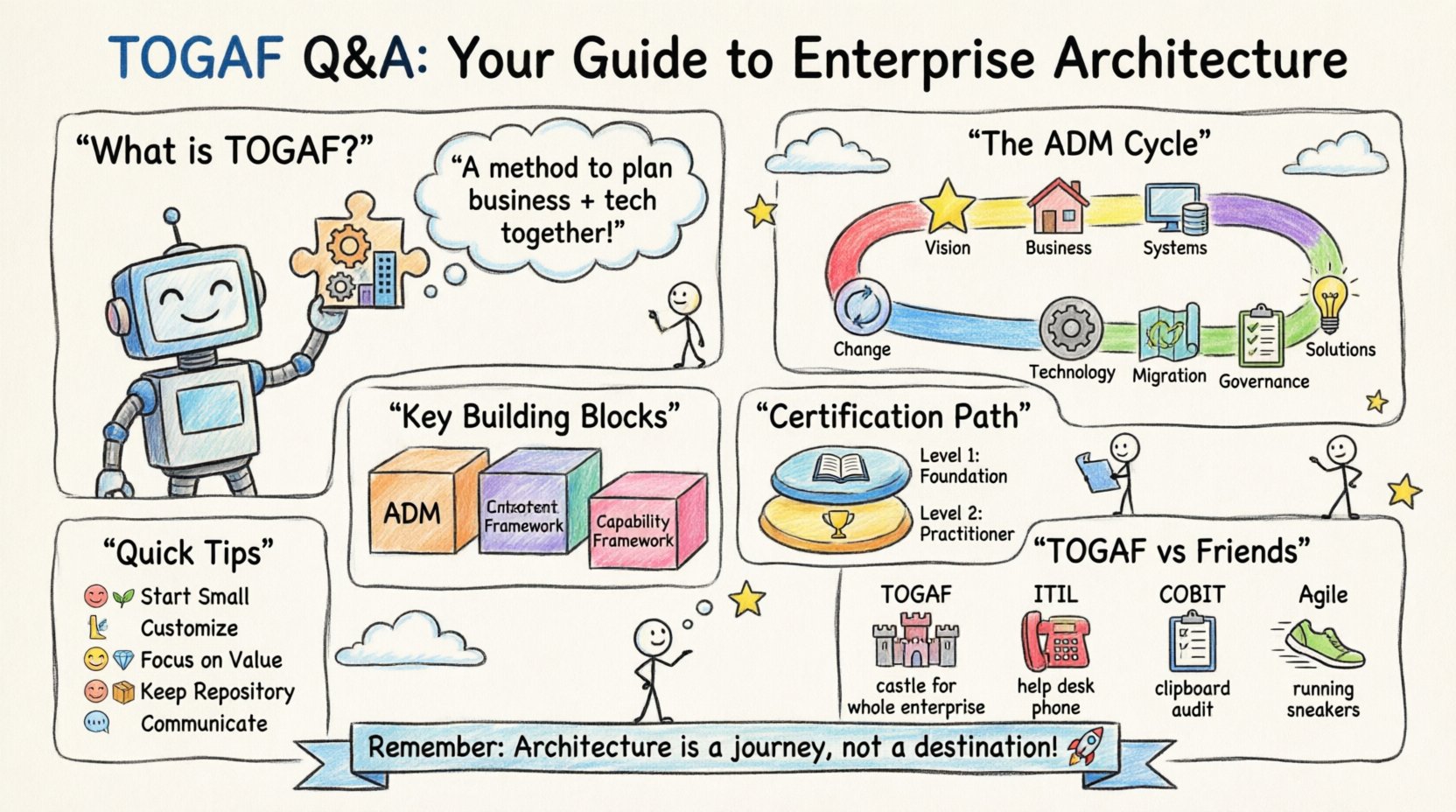
What exactly is TOGAF? It is a framework for developing enterprise architecture. It provides a comprehensive approach to designing, planning, implementing, and governing an enterprise information architecture. The primary goal is to create a unified architecture that supports the organization’s mission and objectives.
Many professionals confuse the framework with a software product. It is important to clarify that TOGAF is a methodology and a set of standards, not a tool you purchase. It relies on human expertise, governance processes, and the architecture repository.
Key Components of TOGAF
- The Architecture Development Method (ADM): The core cycle for developing architecture.
- Architecture Content Framework: Defines the deliverables, artifacts, and building blocks.
- Enterprise Continuum: A model for classifying architecture assets.
- Architecture Capability Framework: Guidance on establishing an architecture function within the organization.
The Architecture Development Method (ADM) Explained 🔄
The ADM is the heart of the framework. It is an iterative cycle that guides the development of an enterprise architecture. It is divided into phases, each with specific objectives and deliverables. Understanding these phases is critical for successful implementation.
Phase A: Architecture Vision
This initial phase sets the stage. It defines the scope, constraints, and stakeholders. The primary output is an Architecture Vision document. This document secures the commitment of senior management and identifies the key questions that the architecture must answer.
- Define the scope and stakeholders.
- Identify high-level business requirements.
- Establish the Architecture Vision.
Phase B: Business Architecture
Here, the focus shifts to the business landscape. It describes the business processes, governance, and organizational structure. The goal is to ensure that the technology supports the business model effectively.
- Map business processes and information flows.
- Identify gaps between current and target states.
- Define the business strategy and governance.
Phase C: Information Systems Architectures
This phase covers both Data and Application architectures.
- Data Architecture: Defines the structure of logical and physical data assets and data management resources.
- Application Architecture: Provides a blueprint for the individual applications to be deployed, their interactions, and their relationships to the core business processes.
Phase D: Technology Architecture
This phase defines the hardware and software capabilities required to support the deployment of business, data, and application services. It includes network infrastructure, operating systems, and database management systems.
Phase E: Opportunities and Solutions
Once the target architecture is defined, this phase determines the best approach for implementation. It involves identifying building blocks that can be reused and assessing the costs and benefits of different solutions.
- Identify major projects and their dependencies.
- Develop an implementation and migration plan.
- Assess risks and mitigation strategies.
Phase F: Migration Planning
This phase creates a detailed project plan for transitioning from the baseline to the target architecture. It prioritizes projects and defines the budget required for the transformation.
Phase G: Implementation Governance
During the actual implementation, this phase ensures that the architecture is adhered to. It involves reviewing projects to ensure they align with the defined architecture and managing changes.
Phase H: Architecture Change Management
Architecture is not static. This phase handles requests for change. It ensures that updates to the architecture are managed systematically and do not compromise the overall integrity of the enterprise.
TOGAF Certification Pathways 🎓
For professionals seeking to validate their skills, The Open Group offers a certification program. This demonstrates competence in understanding and applying the framework.
Level 1: TOGAF Enterprise Architecture Foundation
This level focuses on terminology and concepts. The exam tests the ability to understand the architecture development method and the core components. It does not require practical experience but demands a solid grasp of the theoretical framework.
- Multiple-choice format.
- Focus on definitions and high-level concepts.
- Prerequisite for Level 2.
Level 2: TOGAF Enterprise Architecture Practitioner
This level assesses the ability to apply the framework in a practical scenario. The exam is open-book, allowing candidates to reference the TOGAF standard. It requires a deeper understanding of the ADM phases and how to tailor them.
- Scenario-based questions.
- Requires the Foundation certification.
- Open-book format.
Common Challenges in Implementation ⚠️
Adopting a structured framework like this comes with hurdles. Organizations often struggle with specific aspects during the rollout.
1. Lack of Executive Support
Without sponsorship from senior leadership, architecture initiatives often stall. Architecture is a strategic function that requires top-down alignment to be effective.
2. Over-Engineering
There is a risk of creating architecture that is too complex for the business to understand or use. The framework must be tailored to the size and needs of the organization.
3. Inconsistent Governance
Governance mechanisms must be clear. If there are no rules for compliance, projects will diverge from the target architecture.
4. Talent Gaps
Finding qualified architects who understand both business and technology is difficult. Continuous training and certification are necessary to maintain capability.
TOGAF vs. Other Frameworks 🆚
While TOGAF is the most widely recognized, other frameworks exist. Understanding the distinctions helps in selecting the right approach.
| Framework | Focus | Best Used For |
|---|---|---|
| TOGAF | Enterprise Architecture | Large organizations needing comprehensive EA |
| ITIL | IT Service Management | Managing IT services and support |
| COBIT | IT Governance | Control and audit of IT processes |
| Agile | Project Management | Iterative development and flexibility |
TOGAF is distinct because it covers the entire enterprise, not just IT services or governance. It provides a holistic view of the business and technology landscape.
Roles and Responsibilities 👥
Successful architecture requires defined roles. While titles may vary, the responsibilities remain consistent.
- Chief Architect: Responsible for the overall vision and strategy of the architecture function.
- Lead Architect: Manages specific domains such as Business, Data, or Application.
- Enterprise Architect: Ensures alignment across the enterprise and maintains the architecture repository.
- Project Architect: Focuses on the architecture of specific projects or initiatives.
Implementation Best Practices 🚀
To ensure success, organizations should follow established practices when integrating the framework.
- Start Small: Begin with a pilot project to demonstrate value before scaling.
- Customize the ADM: Do not apply every phase blindly. Adapt the method to fit the organization’s pace and needs.
- Focus on Value: Ensure every architecture activity links back to business value.
- Maintain the Repository: Keep the architecture repository updated to serve as a single source of truth.
- Communicate Effectively: Use visualizations to communicate complex concepts to stakeholders.
The Evolution of the Framework 📈
The Open Group continues to update the framework to reflect modern trends. The latest version incorporates new capabilities and integrates better with agile and DevOps practices.
Key Updates in Recent Versions
- Integration with Agile: Guidance on how to apply architecture in agile environments.
- Cloud Computing: Considerations for cloud-native architectures.
- Security: Enhanced focus on security architecture within the ADM.
- Content Framework: More granular definitions of building blocks.
Frequently Asked Questions ❓
Here are answers to some of the most frequent questions regarding this framework.
| Question | Answer |
|---|---|
| Is TOGAF mandatory? | No, it is a voluntary standard. However, it is widely used by government and large enterprises. |
| How long does certification take? | Preparation time varies, but typically 2-4 weeks for Foundation and 4-6 weeks for Practitioner. |
| Can I use TOGAF without certification? | Yes, the framework is open for anyone to use. Certification validates personal knowledge. |
| What is the difference between Architecture and Design? | Architecture defines the high-level structure, while design details the specific components and implementation. |
| Does TOGAF cover security? | Yes, security is integrated into the ADM phases, particularly in the Preliminary and Implementation phases. |
Building an Architecture Capability Center 🏢
Organizations often establish an Architecture Center of Excellence (CoE) to manage the function. This group provides governance, standards, and support.
Core Functions of the CoE
- Standards Definition: Define and maintain architectural standards.
- Review Boards: Conduct architecture reviews for projects.
- Repository Management: Maintain the architecture repository and knowledge base.
- Training: Provide training and mentorship for architects.
Measuring Success 📊
How do you know if the architecture function is working? Metrics are essential.
- Alignment: Percentage of projects aligned with the target architecture.
- Reuse: Number of architecture building blocks reused across projects.
- Time-to-Market: Reduction in time required to deploy new capabilities.
- Cost Savings: Reduction in redundant systems and maintenance costs.
- Compliance: Adherence to regulatory and internal governance requirements.
The Future of Enterprise Architecture 🔮
The landscape of enterprise architecture is evolving. Digital transformation, artificial intelligence, and data analytics are reshaping how organizations operate.
- Dynamic Architecture: Moving from static documentation to real-time architecture management.
- Data-Driven Decisions: Using analytics to guide architectural choices.
- Ecosystem Thinking: Focusing on partnerships and external integrations beyond the enterprise boundary.
- Automation: Leveraging tools to automate compliance checks and reporting.
Organizations that adapt to these changes will remain competitive. The framework provides the structure, but the application must be agile and responsive to market shifts.
Final Thoughts on Adoption 💡
Adopting a framework is a journey, not a destination. It requires patience, persistence, and a commitment to continuous improvement. The goal is not to follow the rules blindly, but to use the structure to achieve business outcomes.
By understanding the ADM, securing certification, and establishing a robust governance model, organizations can navigate complexity. The framework serves as a guide, not a constraint. When applied with judgment, it enables clarity in decision-making and ensures that technology investments drive real value.
For those looking to deepen their expertise, continuing education is key. Stay updated with new versions of the standard and engage with the professional community. The field of enterprise architecture is dynamic, and staying informed is the best way to ensure long-term success.