

Enterprise architecture is a critical discipline for organizations seeking alignment between business strategy and IT execution. The Open Group Architecture Framework, commonly known as TOGAF, provides a standardized approach to designing, planning, implementing, and governing enterprise information architecture. This guide explores the fundamental building blocks that make the framework robust and adaptable for modern business needs.
What is the TOGAF Standard? 📜
TOGAF is a framework that offers a comprehensive approach for designing an enterprise architecture. It is not a product or a software tool, but rather a methodology and set of supporting tools. The core purpose is to help organizations manage their information assets and ensure that technology investments support business goals. By providing a common language and structure, TOGAF enables stakeholders to communicate effectively across departments.
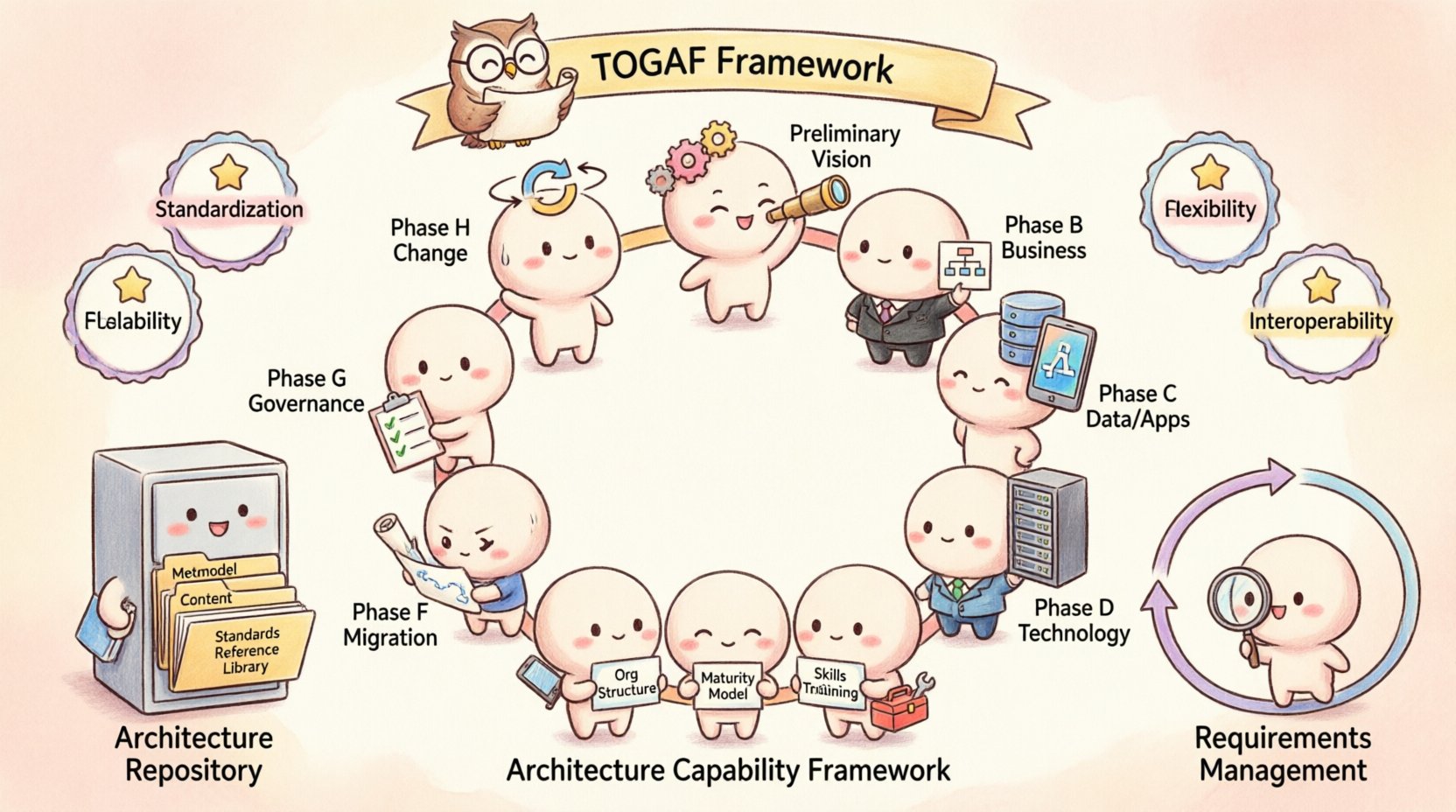
The framework is built on several key pillars that ensure consistency and repeatability. These pillars include the Architecture Development Method, the Architecture Repository, and the Architecture Capability Framework. Understanding these elements is essential for anyone tasked with leading or participating in an architecture initiative.
- Standardization: Ensures all teams follow the same processes and terminology.
- Scalability: Allows the framework to be adapted for small projects or large enterprise transformations.
- Flexibility: Supports various methodologies and tools without being rigid.
- Interoperability: Facilitates integration between different systems and organizational units.
The Architecture Development Method (ADM) 🔄
At the heart of the TOGAF framework lies the Architecture Development Method, often abbreviated as ADM. This iterative cycle guides the creation and management of enterprise architecture. It is not a linear process but a cycle that can be repeated as business needs evolve. The ADM ensures that architecture is developed in a structured manner, with clear deliverables at each stage.
The method consists of multiple phases, each with specific goals and outputs. These phases are designed to cover the entire lifecycle of an architecture project, from initial vision to final implementation and governance. Below is a detailed breakdown of the core phases.
| Phase | Focus Area | Key Output |
|---|---|---|
| Preliminary | Principles & Standards | Architecture Principles |
| A | Business Vision | Architecture Vision |
| B | Business Architecture | Business Model |
| C | Data & Application | Information Systems Architecture |
| D | Technology Architecture | Technology Landscape |
| E | Solutions | Implementation Plan |
| F | Migration | Migration Plan |
| G | Governance | Compliance Assessment |
| H | Change Mgmt | Change Request |
Preliminary Phase ⚙️
The initial step involves setting up the architecture capability. This includes defining the principles, standards, and tools that will guide the work. It ensures that the organization is ready to undertake architecture development. Key activities include identifying stakeholders and defining the scope of the architecture.
Phase A: Architecture Vision 👁️
This phase establishes the high-level vision for the architecture. It involves defining the scope, constraints, and assumptions. The output is a statement of the architecture vision that aligns with business strategy. Stakeholder concerns are identified and addressed early to ensure buy-in.
Phase B: Business Architecture 🏢
Here, the focus shifts to understanding the business structure. This includes defining business processes, organizational units, and functions. The goal is to create a blueprint of how the business operates. This blueprint serves as the foundation for subsequent technical architectures.
Phase C: Information Systems Architectures 💻
Phase C is divided into data and application architectures. It details the data structures and the applications that process them. This ensures that information flows efficiently across the organization. The alignment between data and applications is critical for system integrity.
Phase D: Technology Architecture 🖥️
This phase defines the hardware and software infrastructure required to support the business and data layers. It includes networks, servers, and platforms. The technology architecture must be robust enough to handle current and future workloads.
Phase E: Opportunities and Solutions 🛠️
In this phase, potential solutions are evaluated against the architecture. The goal is to select the best options for implementation. This includes making decisions about build versus buy scenarios. Risks and opportunities are assessed to ensure viable pathways forward.
Phase F: Migration Planning 🗺️
Once solutions are selected, a detailed plan for moving from the current state to the target state is created. This involves sequencing activities and managing resources. The migration plan ensures a smooth transition with minimal disruption to business operations.
Phase G: Implementation Governance ⚖️
During implementation, governance ensures that the project adheres to the architecture. It involves monitoring compliance and managing changes. If deviations occur, they are managed through formal processes. This maintains the integrity of the architecture throughout execution.
Phase H: Architecture Change Management 🔄
After implementation, the architecture is monitored for changes. New requirements may emerge that necessitate adjustments to the architecture. This phase ensures that the architecture remains relevant and effective over time.
Requirements Management 🔍
Throughout the ADM cycle, requirements management is a continuous activity. It ensures that all architecture decisions are traceable to business requirements. This maintains alignment between what the business needs and what the architecture delivers.
The Architecture Repository 🗄️
The Architecture Repository is the storage location for all architecture artifacts. It acts as a central hub for information, ensuring that data is accessible and consistent. This repository supports the ADM by providing the necessary inputs for each phase.
It contains several key components that facilitate effective architecture management. These components include standards, models, and policies. By centralizing this information, organizations reduce redundancy and improve decision-making.
| Component | Description |
|---|---|
| Architecture Metamodel | Defines the structure of architecture information |
| Content Repository | Stores models, diagrams, and documentation |
| Standards Repository | Contains technical and management standards |
| Reference Library | Provides guidance and best practices |
- Consistency: Ensures all teams use the same definitions and formats.
- Reusability: Allows components to be reused across different projects.
- Traceability: Links decisions to their underlying requirements.
- Accessibility: Makes information available to authorized personnel.
Architecture Capability Framework 🛠️
The Architecture Capability Framework defines the organizational structures and skills required to support architecture. It ensures that the organization has the necessary maturity to execute the framework effectively. This framework focuses on the people and processes rather than just the technology.
Organizational Structure
Defining the roles and responsibilities is crucial. This includes the Architecture Board, Architecture Team, and Business Stakeholders. Clear lines of authority prevent confusion and ensure accountability. Each role has specific duties that contribute to the overall success of the architecture.
Architecture Maturity Model
This model assesses the current state of architecture capability within the organization. It identifies gaps and areas for improvement. By understanding the maturity level, leaders can plan realistic roadmaps for development. Progress is measured against established benchmarks.
Skills and Training
Investing in human capital is essential. Architects require specific skills in modeling, communication, and strategy. Training programs help bridge skill gaps. Continuous learning ensures the team stays updated with industry trends.
Architecture Governance and Compliance ⚙️
Governance ensures that architecture decisions are made and implemented correctly. It involves oversight mechanisms that verify adherence to principles and standards. Without governance, projects may drift away from strategic goals.
Compliance checks are performed regularly to validate that implementations match the architecture. This includes audits and reviews. Issues identified during these checks are addressed through remediation plans. Governance is not just about control; it is about enabling successful delivery.
- Decision Making: Clear processes for approving architecture changes.
- Risk Management: Identifying and mitigating architectural risks.
- Performance Measurement: Tracking the value delivered by architecture.
- Stakeholder Engagement: Keeping all parties informed and involved.
Summary of Benefits 📈
Implementing this framework brings significant value to an organization. It creates a shared understanding of the enterprise landscape. This clarity reduces duplication of effort and lowers costs. Strategic alignment is improved, ensuring that technology investments deliver business value.
The structured approach allows for better risk management. By planning thoroughly, organizations can anticipate challenges before they occur. This proactive stance leads to more stable and reliable systems. Furthermore, the framework supports agility, allowing the organization to adapt to market changes quickly.
Ultimately, the goal is to create a resilient architecture that supports long-term growth. By adhering to the core components and structure, organizations can achieve their objectives with confidence. The framework provides the necessary tools to navigate complex environments and drive innovation.