Enterprise architecture serves as the backbone for organizational transformation. Within this discipline, the TOGAF Reference Architecture stands out as a foundational framework designed to align business strategy with IT capabilities. Understanding this framework is essential for architects aiming to build resilient, scalable, and efficient systems. This guide explores the components, methodologies, and practical applications of the TOGAF Reference Architecture to support effective decision-making and strategic planning.
Understanding the Foundation 🧱
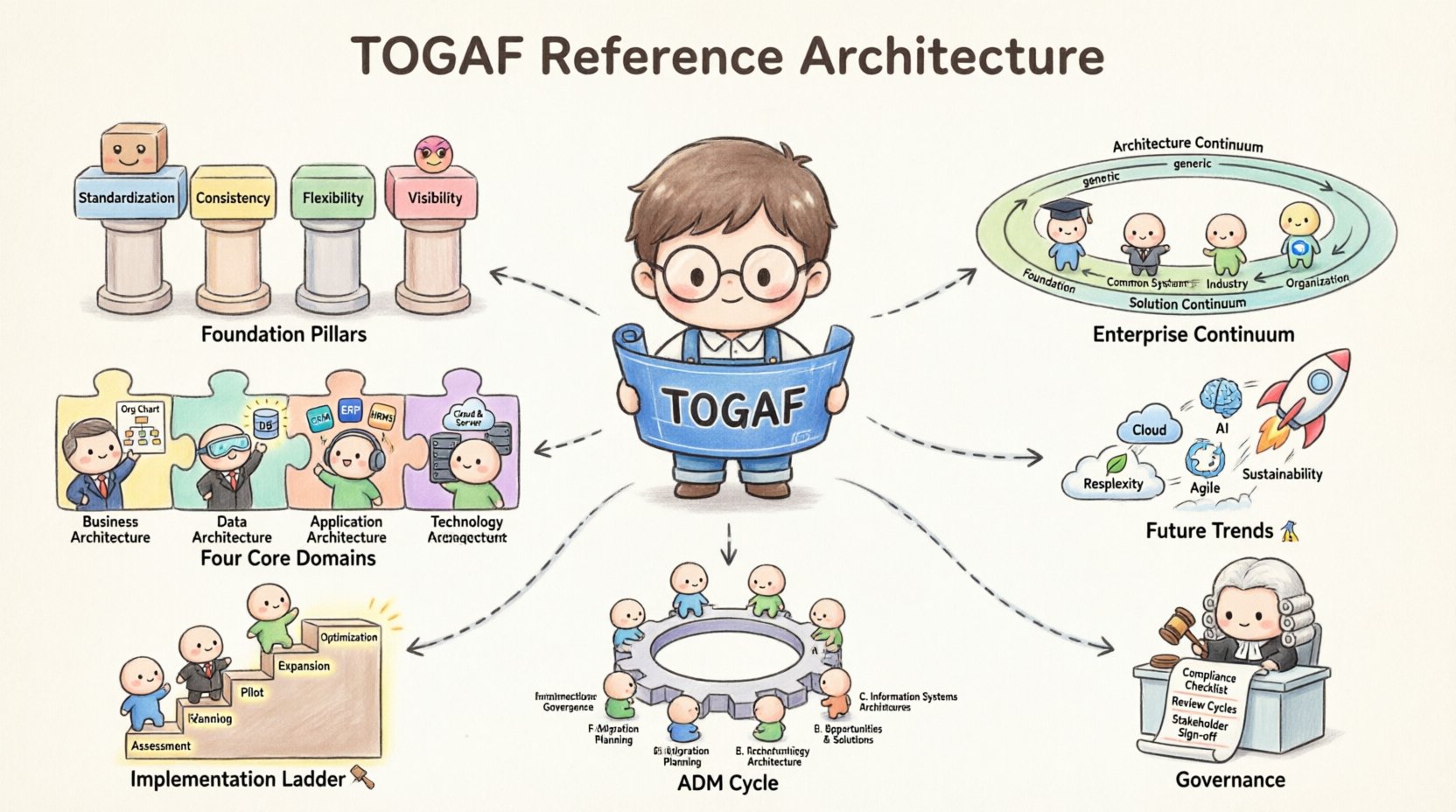
The TOGAF Reference Architecture is not merely a set of diagrams or a collection of documents. It is a structured approach to managing enterprise architecture. It provides a standardized view of the enterprise, ensuring that all stakeholders speak the same language. By adopting this framework, organizations can reduce redundancy, improve interoperability, and align technology investments with business goals.
- Standardization: Establishes common terms and models.
- Consistency: Ensures architectural decisions are repeatable.
- Flexibility: Adapts to changing business needs without breaking existing systems.
- Visibility: Offers clear insight into the current and target states of the enterprise.
When implementing this framework, it is crucial to avoid treating it as a rigid mandate. Instead, view it as a flexible guide that can be tailored to specific organizational contexts. The goal is to create a living architecture that evolves alongside the business.
The Enterprise Continuum Explained 🔄
A core component of the TOGAF Reference Architecture is the Enterprise Continuum. This concept helps architects organize and classify architecture assets. It acts as a repository for architecture and solution assets, allowing for reuse and consistency across the enterprise.
Levels of the Continuum
The continuum is divided into two main areas:
- Architecture Continuum: Contains generic architectures that are reusable across multiple organizations.
- Solution Continuum: Contains specific architectures tailored to a single organization or project.
These levels help in categorizing assets from generic industry standards to specific implementation details. This hierarchy ensures that architects do not reinvent the wheel for common problems.
- Foundation Architecture: Basic building blocks and standards.
- Common System Architecture: General solutions used by many organizations.
- Industry Architecture: Specific to a particular sector, such as finance or healthcare.
- Organization Architecture: Specific to the individual enterprise.
By utilizing the Enterprise Continuum, organizations can leverage existing knowledge and assets, reducing development time and costs. It promotes a culture of sharing and collaboration across different departments and business units.
Core Architecture Domains 🧩
The TOGAF framework defines four primary architecture domains. These domains cover the various aspects of the enterprise that require architectural attention. Addressing each domain ensures a holistic view of the organization.
| Domain | Focus Area | Key Questions |
|---|---|---|
| Business Architecture | Strategy, Governance, Processes | How is the business organized? |
| Data Architecture | Information Assets, Management | How is data structured and used? |
| Application Architecture | Software, Systems, Interactions | What applications support the business? |
| Technology Architecture | Hardware, Networks, Infrastructure | What technology supports the applications? |
Business Architecture
This domain describes the business strategy, governance, organization, and key business processes. It ensures that the IT landscape supports the business model effectively. Key artifacts include:
- Business Capability Maps
- Value Streams
- Organization Maps
- Process Models
Data Architecture
Focuses on the logical and physical data assets and data management resources. It defines how data is stored, managed, and utilized. Key considerations include:
- Data Models
- Data Standards
- Data Security
- Data Governance
Application Architecture
Provides a blueprint for individual application systems, their interactions, and their relationships to the core business processes. It ensures that applications are integrated and efficient.
- Application Portfolio
- Interface Definitions
- Integration Patterns
- Service Definitions
Technology Architecture
Describes the logical software and hardware capabilities required to support the deployment of business, data, and application services. This includes infrastructure, platforms, and networks.
- Network Topology
- Hardware Specifications
- Security Infrastructure
- Platform Services
Addressing these domains in a structured manner prevents siloed thinking. It ensures that changes in one area are evaluated for their impact on the others.
Integration with the Architecture Development Method 📋
The Architecture Development Method (ADM) is the core engine of TOGAF. The Reference Architecture integrates seamlessly with the ADM cycles. The ADM provides a step-by-step approach to developing an architecture.
The Reference Architecture serves as a starting point for the ADM. It provides the baseline models and standards that guide the development process. As the ADM cycles through its phases, the Reference Architecture is updated to reflect the current state and the target state.
Key ADM Phases
- Phase A: Architecture Vision: Define the scope and identify stakeholders.
- Phase B: Business Architecture: Develop the business architecture.
- Phase C: Information Systems Architectures: Develop data and application architectures.
- Phase D: Technology Architecture: Develop the technology architecture.
- Phase E: Opportunities and Solutions: Identify implementation options.
- Phase F: Migration Planning: Plan the transition.
- Phase G: Implementation Governance: Ensure compliance.
- Phase H: Architecture Change Management: Manage changes.
During Phase A, the Reference Architecture is selected or tailored. Throughout the subsequent phases, it acts as a reference point for validation. This integration ensures that the final architecture aligns with the established standards and best practices.
Governance and Compliance ⚖️
Implementing a reference architecture requires robust governance. Without governance, architectural standards may be ignored, leading to fragmentation and technical debt. Governance ensures that the architecture is followed and that changes are managed properly.
Architecture Compliance
Compliance reviews are conducted to ensure that projects adhere to the defined architecture. This involves:
- Reviewing project plans against architectural standards.
- Conducting design reviews before implementation.
- Monitoring post-implementation to ensure alignment.
Architecture Board
An Architecture Board is typically established to oversee governance. This group includes senior stakeholders who have the authority to approve or reject architectural decisions. Their responsibilities include:
- Managing architectural risks.
- Resolving conflicts between domains.
- Ensuring compliance with regulations.
- Approving major architectural changes.
Effective governance creates a culture of accountability. It ensures that every architectural decision is traceable and justified. This reduces the risk of costly rework and ensures long-term stability.
Implementation Strategies 🛠️
Adopting the TOGAF Reference Architecture is a significant undertaking. It requires careful planning and execution. There is no one-size-fits-all approach. Organizations must tailor the framework to their specific needs and maturity levels.
Phased Adoption
Instead of attempting to implement everything at once, a phased approach is recommended. This allows the organization to learn and adapt.
- Phase 1: Assessment: Evaluate current architecture maturity.
- Phase 2: Planning: Define the roadmap and priorities.
- Phase 3: Pilot: Implement in a specific department or project.
- Phase 4: Expansion: Roll out across the organization.
- Phase 5: Optimization: Refine processes based on feedback.
Training and Enablement
People are the most critical asset in architecture. Training ensures that staff understand the framework and their roles within it. This includes:
- Workshops for architects and designers.
- Webinars for project managers.
- Documentation for developers.
- Regular knowledge-sharing sessions.
Investing in training yields higher adoption rates and better results. It empowers the workforce to use the framework effectively.
Common Challenges ⚠️
While the framework offers many benefits, there are challenges to consider. Recognizing these early helps in mitigating risks.
- Complexity: The framework can be seen as overly complex. Simplification is key.
- Resistance to Change: Stakeholders may resist new processes. Communication is vital.
- Resource Constraints: Implementing architecture requires time and budget. Prioritize high-value areas.
- Static Documentation: Documentation can become outdated. Use tools to keep it current.
- Siloed Teams: Departments may work in isolation. Foster cross-functional collaboration.
Addressing these challenges requires leadership commitment and a clear vision. It is important to communicate the value of the architecture to all levels of the organization.
Future Considerations 🚀
The landscape of enterprise architecture is evolving. New technologies and methodologies are emerging. The TOGAF framework adapts to these changes through updates and extensions.
- Cloud Computing: Integrating cloud services into the technology architecture.
- Artificial Intelligence: Leveraging AI for data analysis and decision support.
- Agile and DevOps: Aligning architecture with agile delivery methods.
- Sustainability: Considering environmental impact in architectural decisions.
Staying informed about these trends ensures that the architecture remains relevant. Continuous learning is essential for architects.
Summary and Next Steps 📝
The TOGAF Reference Architecture provides a robust foundation for enterprise architecture. It offers structure, consistency, and a shared language for stakeholders. By understanding the domains, the continuum, and the ADM integration, organizations can build systems that support their strategic goals.
To move forward, consider the following actions:
- Conduct a maturity assessment of current practices.
- Identify key stakeholders and secure their support.
- Develop a tailored implementation plan.
- Invest in training and education.
- Establish governance mechanisms early.
Success in enterprise architecture is a journey, not a destination. By leveraging the TOGAF Reference Architecture, organizations can navigate this journey with confidence and clarity. The blueprint is ready; the next step is to build upon it.