Enterprise architecture serves as the blueprint for organizational structure, processes, and technology. Among the various frameworks available, the TOGAF Standard stands out as a foundational approach for developing, maintaining, and governing enterprise architecture. This guide explores the core principles, the Architecture Development Method (ADM), and the essential components that make TOGAF a robust choice for complex organizations.
🔍 Understanding the TOGAF Standard
The Open Group Architecture Framework (TOGAF) provides a step-by-step approach to designing, planning, implementing, and governing an enterprise information architecture. It is not merely a set of tools but a methodology for organizing and aligning business strategy with IT capabilities. Organizations adopt this framework to manage change, reduce risk, and ensure that technology investments support long-term business goals.
Key aspects of the standard include:
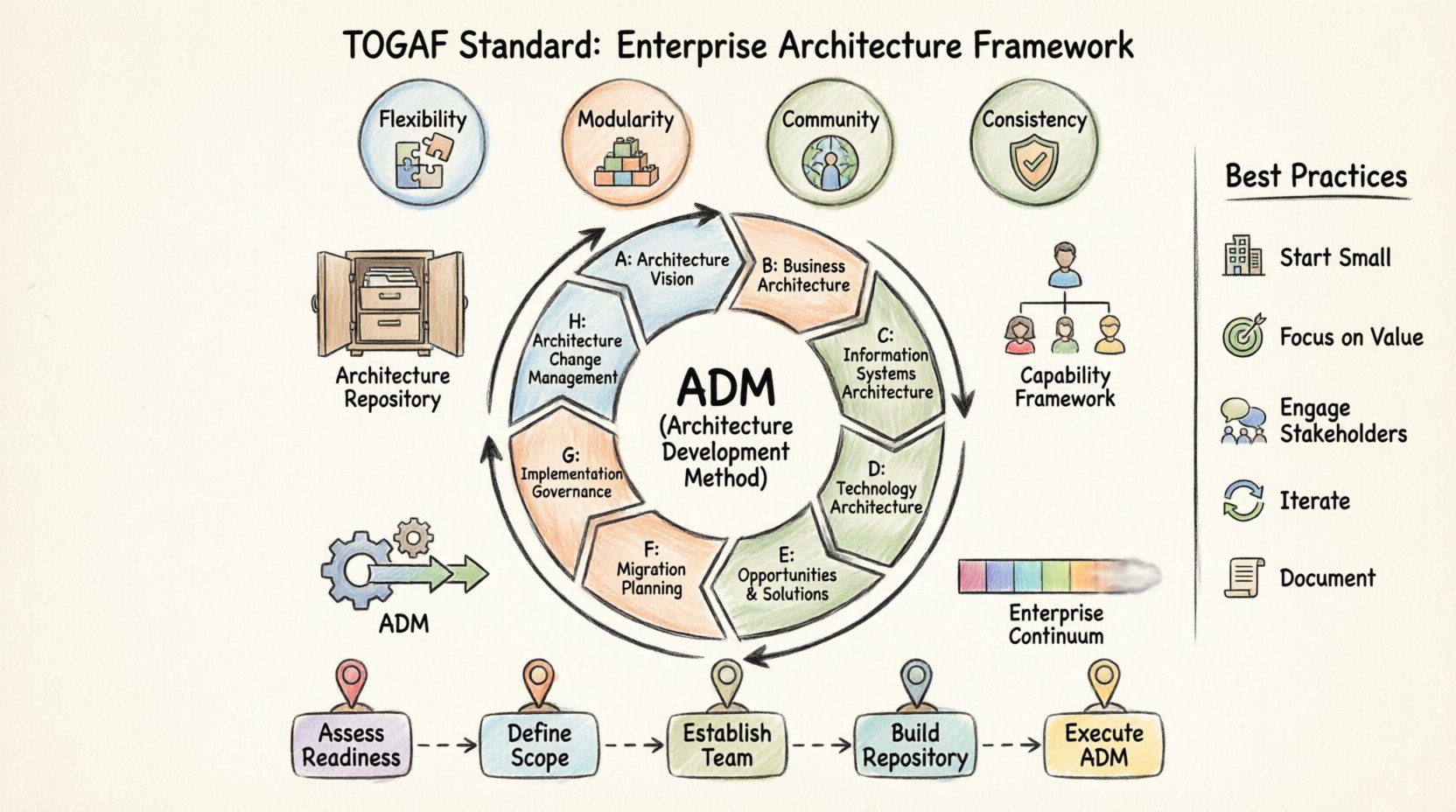
- Flexibility: It adapts to the specific needs of any industry or organization size.
- Modularity: Components can be used individually or together.
- Community: It is maintained by a global community of practitioners.
- Consistency: It ensures a consistent approach to architecture across the enterprise.
Unlike proprietary models, TOGAF is open and free to use. This accessibility allows teams to focus on the substance of the architecture rather than licensing costs or vendor lock-in.
🧩 Core Components of the Framework
To utilize the framework effectively, one must understand its fundamental building blocks. These components work together to create a cohesive architecture practice.
1. The Architecture Development Method (ADM)
The ADM is the heart of the framework. It is an iterative process used to develop and manage enterprise architecture. It provides a cycle that organizations can repeat as business needs evolve.
2. The Architecture Repository
This is a storage location for the architecture work products. It contains artifacts such as models, diagrams, requirements, and standards. The repository ensures that architectural decisions are documented and accessible for future reference.
3. The Architecture Capability Framework
This component focuses on establishing the organization’s ability to perform architecture work. It involves defining roles, responsibilities, and processes to ensure the architecture function is sustainable.
4. The Enterprise Continuum
The Enterprise Continuum provides a way to organize and classify architectural assets. It ranges from generic foundation architectures to organization-specific architectures, helping teams find reusable assets.
📊 The Architecture Development Method (ADM) Overview
The ADM consists of a series of phases. Each phase has specific inputs, activities, and outputs. The process is iterative, meaning it often loops back to previous phases as new information emerges.
| Phase | Focus | Key Output |
|---|---|---|
| Phase A | Architecture Vision | Architecture Vision Document |
| Phase B | Business Architecture | Business Architecture Definition |
| Phase C | Information Systems Architectures | Data & Application Architectures |
| Phase D | Technology Architecture | Technology Architecture Definition |
| Phase E | Opportunities & Solutions | Implementation & Migration Plan |
| Phase F | Migration Planning | Migration Plan |
| Phase G | Implementation Governance | Implementation Governance |
| Phase H | Architecture Change Management | Architecture Change Request |
🔄 Deep Dive into the ADM Phases
Understanding the flow of the ADM is critical for successful implementation. Below is a detailed look at the phases.
Phase A: Architecture Vision
This initial phase sets the stage. The primary goal is to define the scope, constraints, and stakeholders for the architecture project. A high-level vision is established to ensure alignment with business strategy.
- Activities: Identify stakeholders, establish the architecture team, and define the scope.
- Input: Business strategy and project charter.
- Output: Architecture Vision Document.
Phase B: Business Architecture
Here, the focus shifts to the business itself. This phase defines the business processes, governance, organization, and key business information.
- Activities: Develop business models, map processes, and identify gaps.
- Input: Architecture Vision.
- Output: Business Architecture Definition.
Phase C: Information Systems Architectures
This phase covers the data and application layers. It ensures that information is managed effectively and that applications support the business processes defined in Phase B.
- Activities: Define data models, application portfolios, and integration requirements.
- Input: Business Architecture.
- Output: Data and Application Architecture Definitions.
Phase D: Technology Architecture
The Technology Architecture describes the hardware, software, and network infrastructure required to support the applications and data.
- Activities: Define infrastructure standards, platform selection, and security requirements.
- Input: Information Systems Architectures.
- Output: Technology Architecture Definition.
Phase E: Opportunities & Solutions
This phase translates the architectural designs into implementation plans. It involves evaluating potential solutions and determining the best path forward.
- Activities: Analyze solutions, select building blocks, and define work packages.
- Input: Baseline and Target Architectures.
- Output: Implementation & Migration Plan.
Phase F: Migration Planning
Once the plan is defined, detailed migration planning occurs. This ensures that the transition from the current state to the target state is manageable.
- Activities: Prioritize projects, allocate resources, and schedule milestones.
- Input: Implementation Plan.
- Output: Detailed Migration Plan.
Phase G: Implementation Governance
During the execution of the projects, governance is applied to ensure compliance with the architecture. This phase monitors the implementation to prevent drift.
- Activities: Review project progress, validate adherence to standards, and manage exceptions.
- Input: Migration Plan.
- Output: Implementation Governance.
Phase H: Architecture Change Management
The final phase ensures that the architecture remains relevant. As the business environment changes, the architecture must adapt. This phase manages requests for changes.
- Activities: Monitor the environment, assess change requests, and initiate new cycles.
- Input: Operational performance data.
- Output: Architecture Change Request.
🛡️ Architecture Governance
Governance is the practice of ensuring that the architecture delivers value. It involves setting standards, enforcing compliance, and managing risk. Without governance, architecture efforts can become fragmented or misaligned with business goals.
Key Governance Activities
- Compliance Monitoring: Checking projects against the architecture standards.
- Decision Support: Providing guidance to project managers on architectural decisions.
- Asset Management: Maintaining the quality of the architecture repository.
- Stakeholder Engagement: Keeping stakeholders informed and involved.
🚀 Implementing the Framework
Adopting this standard requires a structured approach. It is not a quick fix but a long-term investment in organizational maturity.
Step 1: Assess Readiness
Before starting, evaluate the organization’s current capabilities. Do they have the skills, resources, and leadership support needed? A readiness assessment helps identify gaps.
Step 2: Define the Scope
Decide which parts of the enterprise will be covered. Starting with a pilot project can demonstrate value before expanding to the whole organization.
Step 3: Establish the Team
Form an architecture team with clear roles. This includes architects, analysts, and stewards. Training may be necessary to ensure everyone understands the methodology.
Step 4: Build the Repository
Set up the storage mechanism for architecture artifacts. This should be accessible and organized to facilitate collaboration and reuse.
Step 5: Execute the ADM
Begin the first cycle of the Architecture Development Method. Apply the phases to a real business problem to validate the approach.
⚠️ Common Challenges and Mitigation
Organizations often face hurdles when adopting this framework. Recognizing these challenges early can prevent delays.
- Complexity: The framework can seem overwhelming. Mitigation: Start with a simplified version and expand over time.
- Resistance to Change: Teams may prefer existing processes. Mitigation: Communicate benefits clearly and involve stakeholders early.
- Lack of Skills: Few people may have experience with the standard. Mitigation: Invest in training and certification programs.
- Documentation Burden: Excessive paperwork can slow down progress. Mitigation: Focus on essential artifacts and automate where possible.
📈 Measuring Success
To ensure the framework is delivering value, metrics should be established. Success is not just about completing phases but about achieving business outcomes.
- Alignment: How well does IT support business goals?
- Efficiency: Are projects delivered on time and within budget?
- Quality: Is the architecture stable and scalable?
- Adoption: Are teams using the defined standards and processes?
🔮 The Future of Enterprise Architecture
The landscape of enterprise architecture continues to evolve. Trends such as cloud computing, artificial intelligence, and digital transformation are influencing how frameworks are applied. The standard remains relevant by adapting to these changes.
Practitioners are encouraged to stay updated with new releases and community insights. Continuous learning ensures that the architecture function remains agile and responsive to market shifts.
📝 Summary of Best Practices
For those embarking on this journey, consider the following recommendations:
- Start Small: Do not attempt to overhaul the entire enterprise at once.
- Focus on Value: Prioritize architecture work that delivers immediate business value.
- Engage Stakeholders: Keep communication lines open with business leaders.
- Iterate: Treat the ADM as a cycle, not a linear path.
- Document: Maintain a clear record of decisions and rationales.
By adhering to these principles, organizations can build a resilient architecture that supports growth and innovation. The framework provides the structure, but the team provides the insight. Together, they create a foundation for sustainable success.